Improving Go/Kill Decision Culture

What do new product Go/Kill decision meetings look like in your organization? Are they rubber-stamping rituals that approve most projects with little or no pushback? Or do your business leaders rally high expectations, engage in robust discussion, ask meaningful questions, push for clarity, and make tough Go/Kill decisions to ensure the most meritorious of opportunities are accelerating?
How does your culture respond to people who ask tough questions? Are they described as a ‘wet blanket’ or are they respected for their curiosity? Is it common for team members to take constructive criticism personally or embrace it as valuable insight? Are project kill decisions discussed openly and candidly for their important lessons or are they quietly relegated to the unofficial wall of shame?
You may be getting in the way of your own success
The impact of poor decision culture is easy to spot. Is this happening in your organization?
- Low-value projects are allowed to continue.
- Too many projects in the pipeline and not enough resources to do them well.
- Delays with launches and lackluster in-market performance results.
- Bold, controversial opportunities give way to the safety of incremental innovation.
Business leaders play a critical role in innovation
Business leaders want and need robust discussion to challenge project assumptions, scenarios, biases, alternatives, small think, and auto-pilot development. After all, the innovation project portfolio is nothing more than an unfinished piece of the organization’s strategy – it is a loose collection of ‘placeholders’ for revenue-transformative solutions yet to be conceived and executed. Therefore, the new product process is the vehicle to realize this unfinished piece of the strategy. It does so by experimenting and advancing high-potential opportunities and concepts through the value-adding activities in the stages of development, thus bringing visibility to a pipeline of project execution, to achieve strategic results as intended.
Optimizing the innovation funnel
However, an innovation pipeline will not inherently produce 100% success for every opportunity that enters it. So, it is necessary for business leaders to play a role in innovation – for continuity of strategic intent. A healthy innovation pipeline looks more like a ‘funnel’ whose shape is determined by the decision team (gatekeepers) that are expertly pruning it. Decisions placed at critical points in a project’s lifecycle (gates) are proven to impact an organization’s innovation performance success. Spotting poor concepts and projects early and killing them by reallocating their resources to others that are improving in potential, is what defines gatekeeping.
Gate leadership is more than a Go/Kill decision
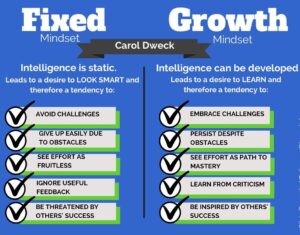
Great gatekeeping is what differentiates the top performers. It is a display of effective leadership in that with just the right amount of oversight at the right intervals, a decision team (gatekeepers) can swoop in and provide objective, project-lifesaving (or ending) guidance. Together, the cross-functional gatekeeping team’s business assessment will either encourage a project team to push the accelerator pedal or end the project with grace and move to the next opportunity. Managing a gated decision process not only produces better innovation results through improved return on innovation investment, but it also nurtures a learning culture with a growth mindset, which in turn, improves the quality of the gates. The broader performance gains that this cycle of “Gate – Learning Culture – Better Gate” produces, is why the Stage-Gate® Governance Model has stood the test of time. It is why companies with innovation growth ambitions prioritize getting their gates into excellent condition. As our Founder Dr Robert G. Cooper claims, “As go the gates, so goes the process!”.
Improving your Go/Kill decision culture
Gate governance enables business leaders the opportunity to role model what a culture of innovation should look like in their organization. Contrary to popular belief, this is not a culture of pizza parties, limitless spending through trial and error, and zero accountability for failure. A culture of innovation is ambidextrous. It embraces the yin and yang (opposite but interconnected forces) required for sustainable, successful innovation:
- The exploratory and experimental nature of creative problem-solving, focused on value creation for the customer (performed in the Stages by teams). And,
- The rigorous pursuit of value creation for the company, through excellence and merit-based investment decision-making (performed in the Gates by business leaders).
There are many parts to an effective Gate Governance design: clear decision points, concise deliverables format with information to support a decision, accountable cross-functional decision team, structured agenda, proven success criteria, rich discussion, clear decisions and so on. The first to embrace to improve your organization’s decision culture is that of ‘healthy questioning’. Through the art and science of effective questioning, decision-makers can influence teams to take on bolder ambitions, shape/grow opportunities and even recommend killing their own project for the realization that it is low value or low impact. The combination of curious questioning (see below), critical thinking (gate criteria and scorecards), candid discussion and tough Go/Kill decisions at gates, leaders can role model the innovation culture they desire. Are you ready to transform your decision culture?
Socratic Questioning Method
Socrates is one of the most famous Greek philosophers and is regarded as one of the wisest people ever to have lived. His method, also known as Socratic questioning, follows the form of disciplined questioning so that we are able to pursue thought in many directions to determine its validity and fullest potential. Below is a handy cheat sheet of this form of questioning – good for use in innovation team meetings as well as gate meetings.
- Clarifying Questions:
- Why do you say that?
- Could you put that another way?
- How does this relate to …?
- What do you mean by?
- What do we already know about…?
- Could you give me an example?
- Assumption-probing Questions:
- What are your assumptions?
- What might we assume instead?
- How can you verify or disapprove that assumption?
- Could you explain why you arrived at that conclusion? (Explain how…)
- Evidencing Questions:
- How do you know that?
- What would be an example?
- What do you think causes this to happen…? Why?
- What evidence (and source) is there to support your conclusion?
- Have you explored other sources?
- By what reasoning did you come to that conclusion?
- What would we have to do to find out if this is factual?
- Questions about Viewpoints and Perspectives:
- You seem to be approaching this from this … perspective. Why?
- What is another way to look at it?
- Would you explain why it is necessary-or beneficial?
- Who benefits? Who doesn’t?
- What are the strengths and weaknesses of…?
- How is this similar to other projects we have completed?
- Implications Questions:
- What generalizations can you make?
- What are the consequences of that assumption?
- What are you implying?
- How does…affect…?
- How does…tie in with what we have learned in earlier stages?
- Why is… important?
- What if we do nothing?
- Questions about the question:
• Why do you think I asked this question?
• How might the other team members answer?
Pioneers in Innovation Process
Our company and Founders, world-renown innovation management scholars Dr Robert G. Cooper and Dr Scott J. Edgett, are the pioneers of the Stage-Gate® Governance Model for Product and Technology Innovation. Our story began with a first-of-its-kind innovation management benchmarking study called NewProd Studies. Its success triggered a continuous 45-year fact-finding mission to surface the most important practices and drivers for new product success. Today, we continue our mission to stay on top of innovation management so you can focus on what matters most to your organization and your customers – delivering high-impact innovation.
Connect with us to discuss how to improve your organization’s Go/Kill decision culture.